
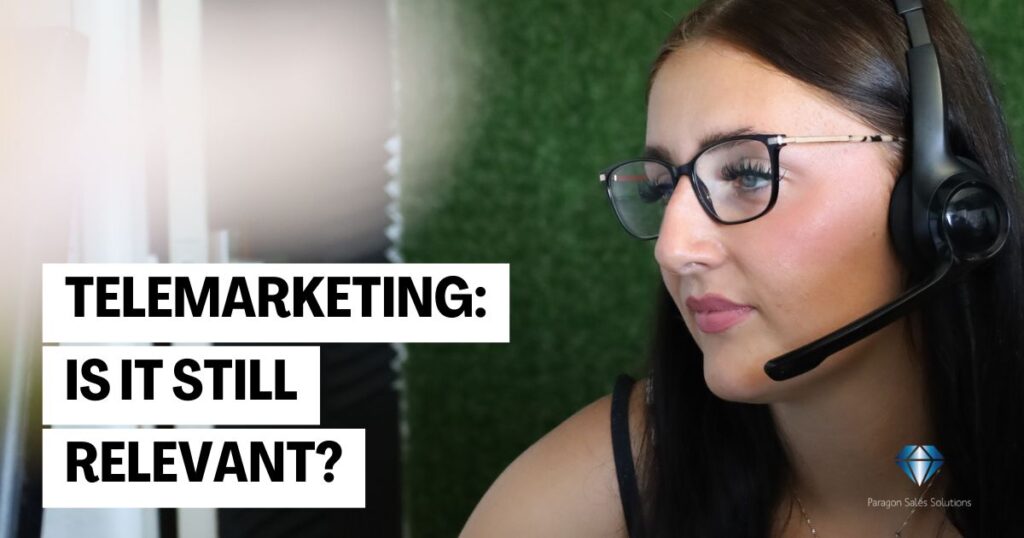
For the past decade, telemarketing has been declared “dead” more times than we can count. Between spam filters, email automation, social media ads, and AI chatbots, the phone was supposed to be obsolete.
And yet… here we are in 2026, and telemarketing is still very much alive.
Not in its old form, though. The era of mass dialling, rigid scripts, and interruptive cold calls is gone. Today’s telemarketing is smarter, more human, and—when done right—surprisingly effective.
So what does telemarketing actually look like in 2026? And why does it still matter?
Let’s break it down.
Telemarketing Didn’t Disappear—It Evolved
The biggest misconception about telemarketing is that it failed. In reality, bad telemarketing failed.
Modern telemarketing has evolved alongside consumer behavior. People now expect:
- Relevance
- Respect for their time
- Personalisation
- Transparency
Companies that adapted to those expectations are still winning on the phone.
In 2026, telemarketing is no longer about volume—it’s about precision and timing.
AI Handles the Heavy Lifting, Humans Handle the Conversation
Artificial intelligence is now embedded in nearly every successful telemarketing operation, but not in the way many feared.
AI doesn’t replace agents—it empowers them.
Today, AI is used to:
- Identify high-intent leads based on real-time data
- Analyze past interactions across email, chat, and CRM systems
- Suggest talking points during live calls
- Predict the best time to call specific prospects
What AI doesn’t do well is build trust, handle nuance, or navigate emotional conversations. That’s where human agents remain irreplaceable.
The winning formula in 2026 is AI-powered insight + human judgment.
Cold Calling Is Out. Contextual Calling Is In.
True “cold calling” is rare now.
Most calls happen after some form of prior engagement:
- A webinar signup
- A content download
- A product trial
- An abandoned checkout
- A referral
- A previous customer relationship
By the time the phone rings, the prospect usually knows the brand—or at least the problem they’re trying to solve.
That context completely changes the dynamic. Calls feel less like interruptions and more like timely follow-ups.
Hyper-Personalisation Is the New Baseline
In 2026, generic scripts don’t survive first contact.
Modern telemarketing is hyper-personalized:
- Calls reference the prospect’s industry, role, and recent activity
- Agents tailor tone and pacing based on behavioral data
- Messaging adapts in real time based on the prospect’s responses
This level of personalization makes conversations feel relevant instead of robotic—and that relevance is what keeps people on the line.
Compliance and Consent Are Non-Negotiable
With stricter global privacy laws and rising consumer awareness, compliance is no longer a checkbox—it’s foundational.
Successful telemarketing teams:
- Operate on explicit consent and permission-based lists
- Respect do-not-call preferences instantly
- Clearly explain why they’re calling and how data is used
- Focus on transparency over persuasion
Ironically, these constraints have made telemarketing better. When people know they can opt out easily, they’re more willing to engage.
Telemarketing Shines Where Digital Channels Fall Short
Despite the rise of automation, some moments still demand a real conversation.
Telemarketing remains especially effective for:
- High-ticket B2B sales
- Complex products or services
- Renewals and retention
- Customer recovery and churn prevention
- Clarifying objections that email can’t resolve
When stakes are high or decisions are complex, a human voice still beats a screen.
Trust Is the Real Currency
In 2026, telemarketing isn’t about pressure—it’s about trust.
The best agents sound less like salespeople and more like:
- Consultants
- Advisors
- Problem-solvers
They listen more than they talk. They ask better questions. And they know when not to push for a sale.
This shift has transformed telemarketing from a transactional channel into a relationship-building tool.
Why Telemarketing Still Matters in 2026
So why does telemarketing remain relevant when so many other channels exist?
Because:
- People still value human connection
- Voice builds trust faster than text
- Conversations uncover insights data alone can’t
- Timing and tone matter—and humans excel at both
Telemarketing works not because it’s loud, but because it’s direct, personal, and adaptable.
The Bottom Line
Telemarketing in 2026 isn’t about dialing more numbers—it’s about making fewer, better calls.
It’s powered by AI, guided by data, shaped by ethics, and delivered by humans who know how to listen.
The companies that understand this aren’t asking whether telemarketing still works.
They’re asking how to do it better.
And that’s why telemarketing isn’t going anywhere.
If you want to learn how Paragon Sales Solutions can design telemarketing campaigns that respect your business, your audience, and your goals, book in your free consultation today!