
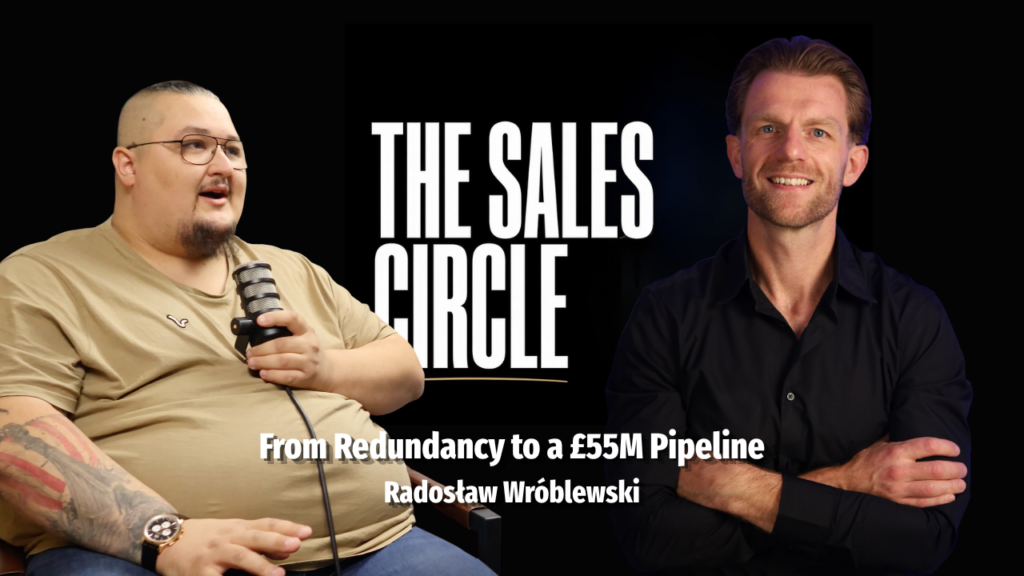
What do you say when a client asks, “Can you do it any cheaper?” For most businesses the answer is a reluctant yes. For Radosław (Rad) Wróblewski, it’s a red flag.
Rad is the owner and managing director of Sparrow Construction, a family-run commercial specialist construction company based in Kettering. He founded it in late 2017, just months after being made redundant with a new mortgage and a six-month-old baby. Today Sparrow works across the UK and Europe, has plans to grow internationally and holds a pipeline valued at over £55 million.
As the first guest of Season Three of The Sales Circle, Rad sat down with Rob Spence to share how he sells on value, wins work without cold calling and decides who to hire. Here are six lessons from the conversation.
1. When they ask for a discount, ask what to remove
Rad’s most controversial point: Sparrow refuses work. When a buyer’s first question is about price, he takes it as a sign they care more about cost than quality.
He is happy to offer a cheaper option, but the conversation changes. It’s not “how much can we knock off?” but “which services would you like removed?” If a client wants the full service at a discounted price, Rad points them towards competitors who will happily join the race to the bottom.
His only regret is not taking this stance sooner. Chasing every job out of fear meant fixing other people’s mistakes; now his team quotes for the problems they can see coming and solves them up front. That, he explains, is why one quote might be £10,000 and his is £30,000.
The lesson: a discount request is a test of how you value your own work. Protect the scope, not just the price.
2. Sponsorship opens doors, even when it doesn’t close deals
In the past year Sparrow has become an official partner of Northampton Town and put its name on Kettering Town’s away shirt. Rad is honest that the Kettering deal is about giving back to his home town, not winning contracts.
Northampton is different. Mentioning the sponsorship in conversations with main contractors and developers shifts the tone: the talk turns to football, common ground appears and the pressure of the pitch disappears.
The lesson: marketing doesn’t have to generate leads directly to be worth it. Shared ground makes every sales conversation easier.
3. Your first customer might already be in front of you
Sparrow’s first contract arrived without Rad asking for it. He and his dad were already working on a job for a fabricator; when the business was formed, the client simply switched over and offered more projects within two weeks.
Rad credits who you know, but adds a caveat: in construction, people quickly find out if you’re talking nonsense. What you know still has to back it up.
4. Let your results do the outbound
In the early days, Rad went out and found the work himself. Now most new business comes through referrals from contractors and subcontractors who have seen the results. Outbound is limited to the occasional reminder that Sparrow exists.
The lesson: in a reputation-driven industry, your last job is your best sales pitch.
5. Listen for the service your clients are asking for
Sparrow began as an installation company. Around 18 months ago, a contracts manager at a tier-one contractor asked why they didn’t source, install and manage the whole package. Rad asked whether he’d buy that service. The answer was yes, and he’d be the first client.
That single conversation reshaped the business. The full-package offer now brings in contracts worth £1 million to £3 million and more, because main contractors were missing that level of control on site.
The lesson: some of your best product ideas come from customer complaints. Ask the follow-up question: “Would you buy that from us?”
6. Hire people you’d buy from
Rad runs interviews as conversations rather than interrogations. For a phone-based role, he asks himself whether he’d stay interested if he were on the other end of the line. For a closer, it’s simpler still: would he buy from them? Personality and presence matter more to him than the CV.
He’s also a firm believer in the office. Junior salespeople, he argues, learn by being around experienced colleagues, hearing how calls are handled and having mistakes caught before they cost a deal.
The Good, the Bad and the Ugly
The episode closes with the Season Three quick-fire game:
- The Good: a desperate client facing £85,000-a-day penalties on a leaking facade. Rad assembled a 12-person team that stripped and resealed 16 curtain walls in two and a half days.
- The Bad: a client who promised the deposit “later”. Later never came, and the job turned out to be a front for taking money before collapsing the business.
- The Ugly: knowing one client always haggled, Rad wrote the whole negotiation with himself into a single email, ending at £26,500. The client replied with one word: proceed.
Watch or listen to the full episode
Hear the full conversation, including why Rad is backing office culture and how he’s planning international growth, on YouTube, Spotify or Apple Podcasts.
Find out more about Sparrow Construction at https://www.sparrowconstruction.co.uk/, or connect with Rad on LinkedIn.
Want to learn from more business leaders? Rob’s book, The Sales Circle | Volume One, collects the best lessons from Season One. Get your copy on Amazon.
Need help with your own sales? Paragon Sales Solutions works with businesses across the UK on sales training and outsourced sales. Get in touch.